Frequently Asked Questions
Considering Therapy? Start Here.
This page answers common questions about the therapy process, consultations, fees, and my approach to care, helping you decide whether working together feels like the right fit.
In-Person Sessions
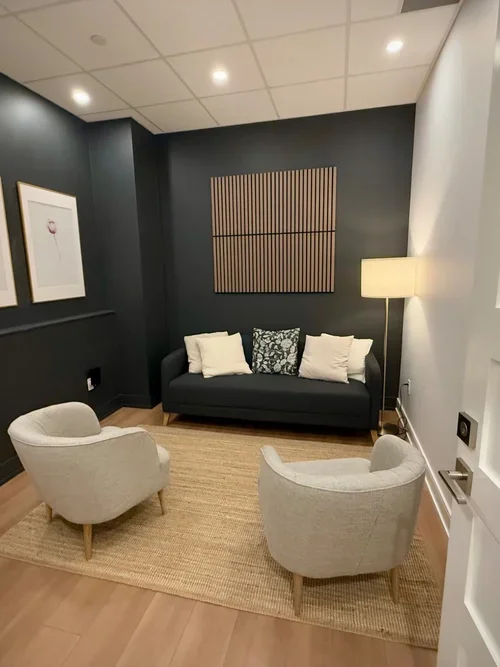
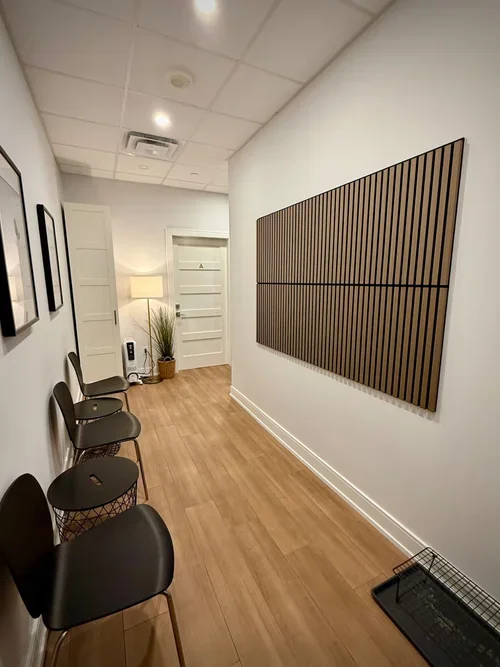
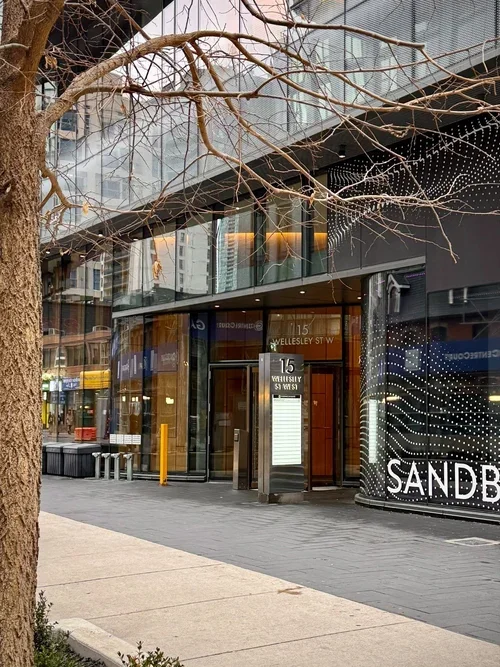
-
My office is located near Yonge and Wellesley, about a five-minute walk from Wellesley Station. A concierge is on duty during regular business hours; outside of those hours, clients can access the building using a secure entry code provided in advance.
-
Please click here for Google Maps directions to the office.
Virtual Sessions

-
I use a secure, encrypted platform called Jane for virtual sessions. Before your appointment, you’ll receive a private video link by email. Clients are encouraged to find a quiet, comfortable space where they feel able to speak openly and without interruption.
-
Jane’s video conferencing software is fully HIPAA-compliant. Please click here to learn more about their commitment to privacy.
What happens during the no-cost call?
1
The free 30-minute virtual consultation is a chance for us to meet, talk a little about what’s bringing you to therapy, and see whether working together feels like a good fit. You’re welcome to ask questions about my approach, credentials, or anything else that would help you feel more comfortable getting started.
How are couples’ consultations structured?
2
Both partners attend the free 30-minute virtual consultation, either together or from separate locations. The consultation is an opportunity for us to meet, hear a little about what has led you to seek couples therapy, and determine whether we'd be a good fit to work together. You're welcome to ask questions about my approach, credentials, or anything else that would help you feel more comfortable getting started.
If you'd like, you can bring along any questions you have about therapy or take a few moments to think about what you're hoping for from the process. That said, many people arrive unsure of what to ask. Please know that that's more than okay—it's welcome.
3
How should I prepare?
Do you offer evening or weekend appointments?
1
I currently offer in-person sessions on Tuesdays and Wednesdays, and virtual sessions on Mondays and Thursdays.
My evening appointment slots are currently full. If evenings are important for your schedule, I’d be happy to add you to my waitlist.
Clients attend therapy weekly or bi-weekly, depending on their needs, goals, and what feels manageable for them financially and emotionally. I ask clients to commit to a consistent appointment time whenever possible (for example, every Monday at 2 p.m. or every other Monday at 2 p.m.).
2
How often are sessions?
Both individual and couples sessions are 50 minutes long. This is often referred to as a “therapy hour.”
3
How long are appointments?
Individual sessions are $150, and couples sessions are $180. Psychotherapy services are exempt from HST.
At the moment, my sliding scale spaces are full.
1
What are your rates?
Yes. As a Registered Psychotherapist, my services are covered by many extended health benefit plans. Because coverage varies, I recommend checking with your insurance provider directly to confirm whether psychotherapy services are included in your plan. I provide a receipt with my registration number for reimbursement.
2
Do you accept insurance?
What is your cancellation policy?
3
If you need to cancel or reschedule an appointment, I ask that you provide at least 24 hours' notice. Appointments cancelled with less than 24 hours' notice, as well as missed appointments, are charged the full session fee.
I understand that unexpected situations can arise, and I appreciate as much notice as possible. This policy helps ensure that appointment times can be offered to other clients who may be waiting for availability.
What if my therapist's background is different from my own?
1
It's unlikely that I will share every aspect of your identity, culture, or lived experience. What I can offer is a commitment to approaching your experiences with openness, humility, and genuine curiosity. My work is informed by Sandra Collins' Culturally Responsive and Socially Just Counselling, which emphasizes an awareness of power and privilege, sensitivity to systemic barriers, and responsiveness to the cultural and social contexts that shape people's lives and relationships.
You are the expert on your own experience. My role is to listen, learn, and work collaboratively with you to understand your unique perspective and the contexts that have shaped it.
Is your practice LGBTQ+ and kink-affirming?
2
Absolutely. Creating a space where clients feel safe, respected, and able to show up fully as themselves is deeply important to me.
My practice is affirming of all sexual orientations, gender identities, relationship structures, and expressions of sexuality. I also have extensive experience working with polyamory and ethical non-monogamy, particularly around attachment, communication, and relationship security (Polysecure is one of my favourite resources to recommend).
Before becoming a therapist, I spent nearly 20 years working as a sex educator within the kink community through workshops, podcasts, and panel discussions. That background continues to inform the openness, curiosity, and non-judgment I bring into my work today.
Is your approach affirming of neurodiversity?
3
As someone with personal experience of masking and burnout, I understand how exhausting it can be to spend years trying to conform to expectations that don't quite fit. Many neurodivergent people have learned to hide parts of themselves, often at a high cost to their energy, wellbeing, and sense of self. In therapy, I aim to create a space where you don't have to perform.
How do you view diagnosis and mental health?
4
I don't assume there is something inherently wrong with you because you are struggling. Many of the challenges people bring to therapy are understandable responses to trauma, discrimination, or environments that haven't supported their needs. I aim to understand your experiences in context.
Diagnoses can sometimes be helpful tools for understanding experiences and accessing support. At the same time, I believe people are far more complex than any label. My goal is to help you make sense of your experiences with curiosity and compassion.
Book a Consultation
Please complete the following form to book a free 30-minute virtual therapy consultation with Kim.